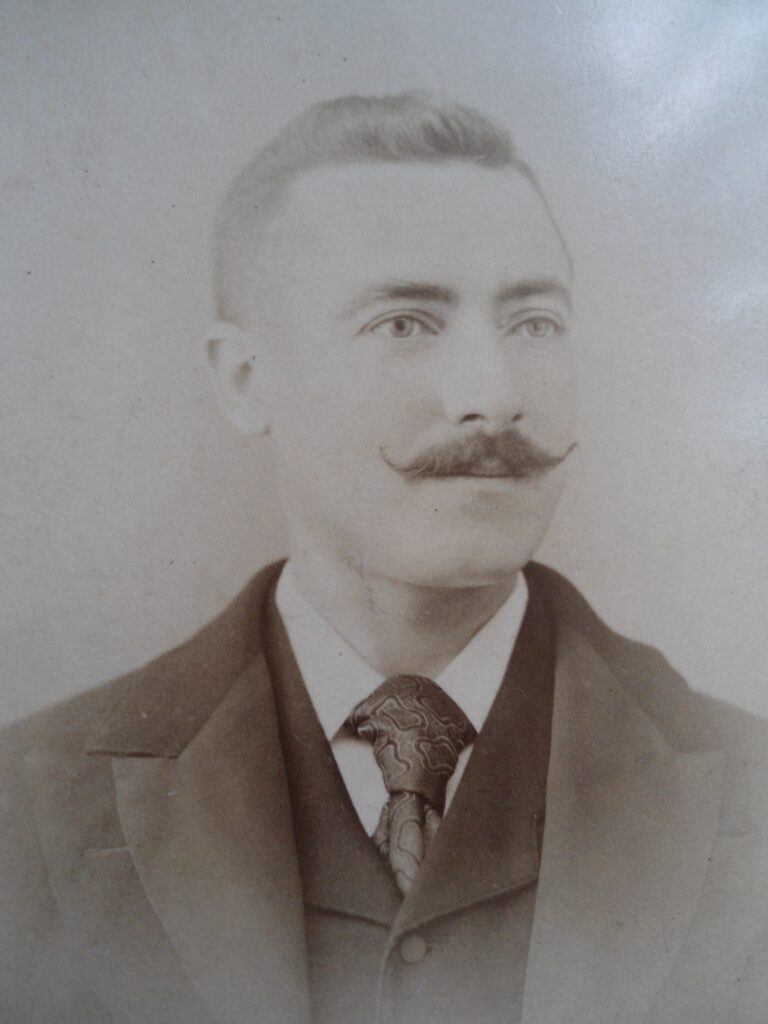
Sam Watson was born in Rainey Street, Magherafelt, the youngest child of Robert Watson and Ann McNeill.
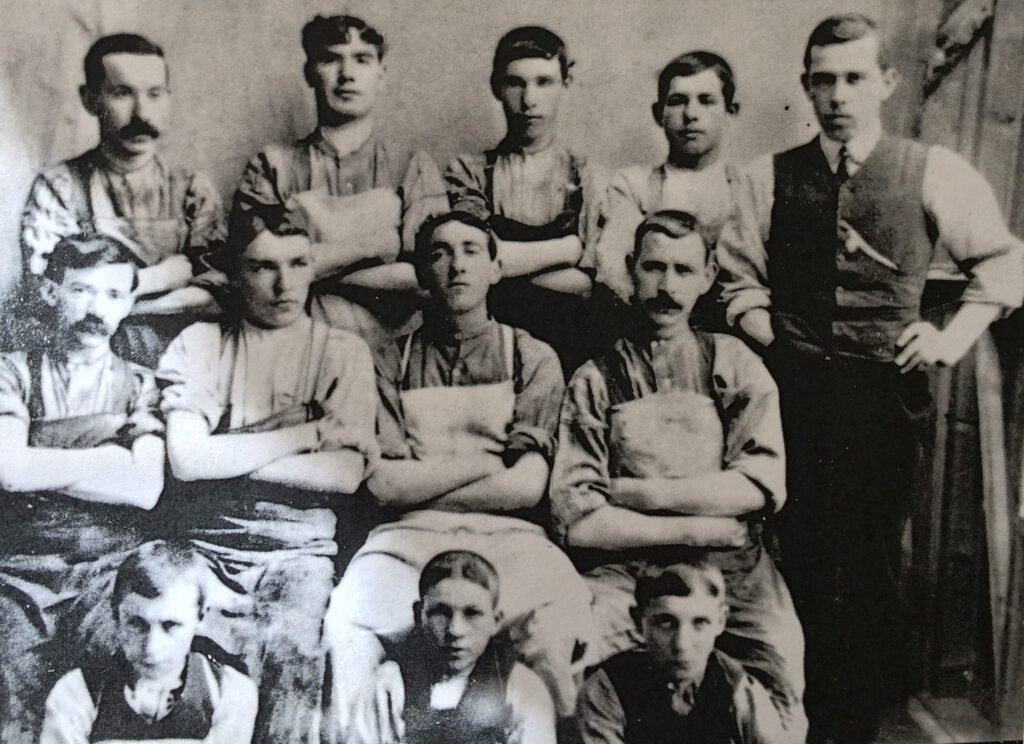
After leaving school, Sam learned the trade of boot and shoemaking and was employed by Mr James Brown of Rainey Street, Magherafelt.
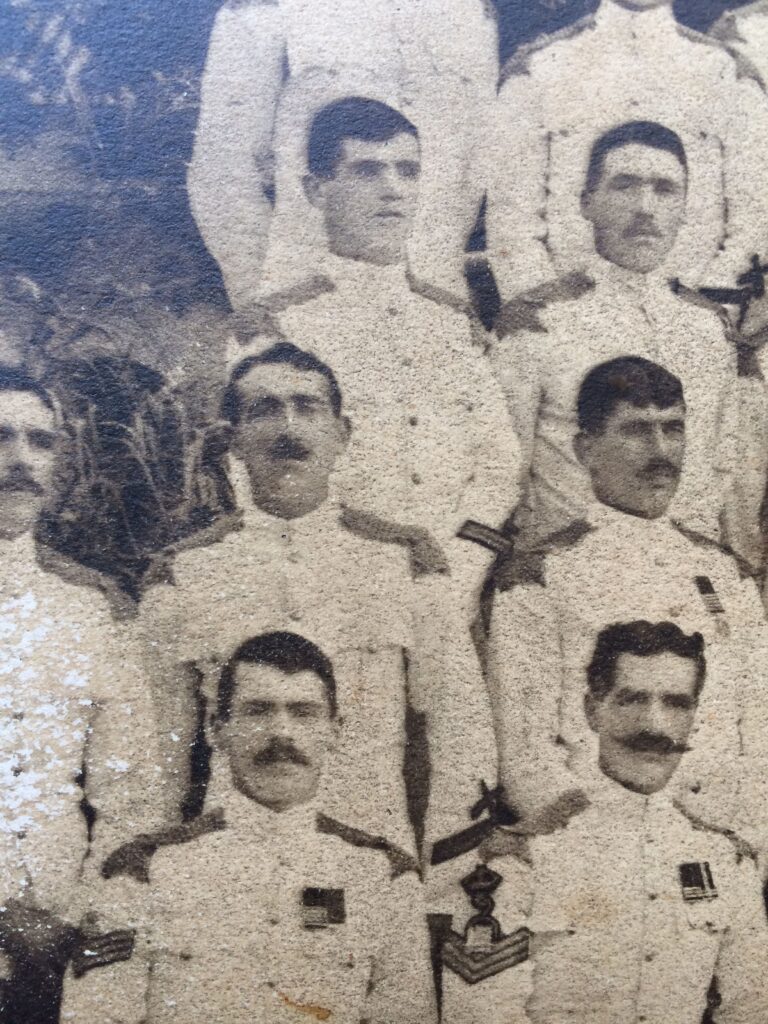
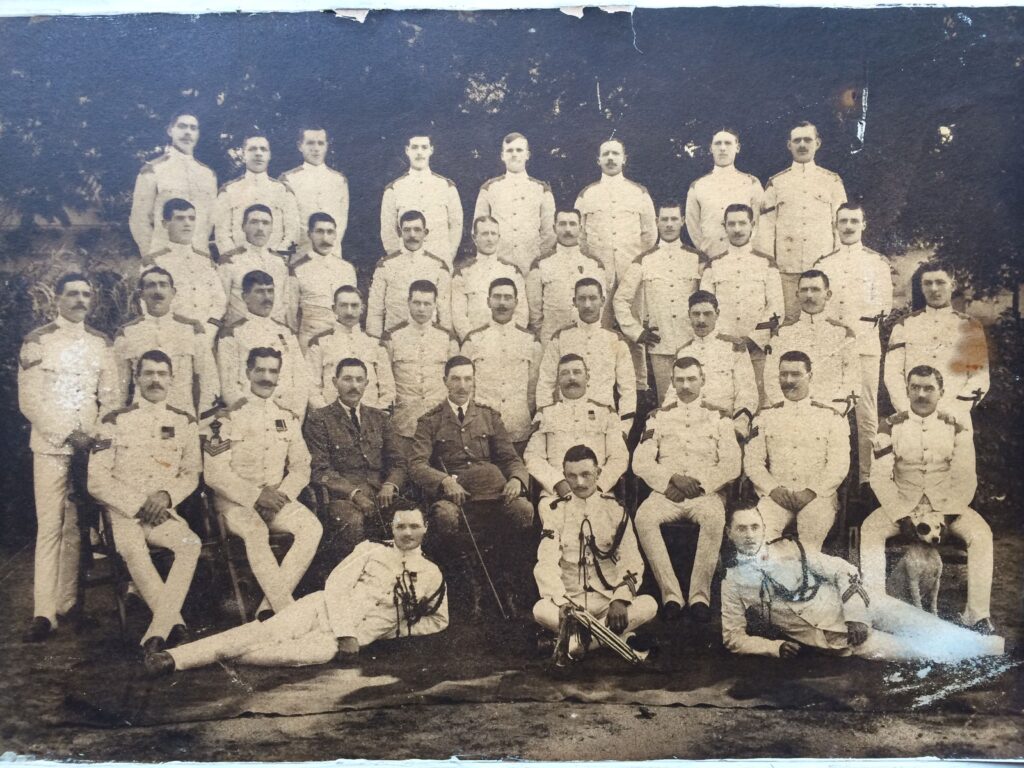
Following three years in the local Militia, Sam joined the 6th Inniskilling Dragoons on 27 December 1906, where for a time, he served under the command of Captain Laurence Oates, who later joined Captain Scott on his ill-fated expedition to the South Pole and who has been immortalised by his last words – ‘I am just going outside and may be some time’.
Sam first served with the Inniskillings in Egypt and by the end of September 1908, was preparing to sail for Bombay (Mumbai) India, as the following neewpaper extract details:
‘H.M. transport ‘Dongola’ left Suez yesterday for Bombay with the 6th Inniskilling Dragoons on board’
(Wednesday 30th September 1908)
The Regiment arrived in Bombay (Mumbai) towards to end of 1908 and by the following year (November 1909), they were stationed in Baroda. At this time an attempted assassination of Lord Minto, the Viceroy of India took place in nearby Ahmedabad.
‘London, November 15 – Lord Minto (Viceroy of India) and Lady Minto had a sensational escape from assassination yesterday at Ahmedabad near Baroda i the Bombay Presidency. Their excellencies were driving from the station, and nearing the Raipur gate, when a Hindoo, in the dense crowd lining the route, was seen throwing missiles, which proved to be two bombs. These were hurled at the viceregal carriage.
A sergeant of the Inniskilling Dragoons who was riding alongside the carriage, cleverly intercepted the first bomb with his sabre. The second hit the jemadar who was holding an umbrella over Lady Minto and fell harmlessly on the ground…’
(The Advertiser, Tuesday 16 November 1909)
A few days later, a reception was held for the Viceroy in Baroda, where he ‘went in procession through the city escorted by the 6th Inniskillings Dragoons and E Battery of the Royal Horse Artillery…’
By December 1911, the Regiment was stationed at Durbar Camp, Delhi. Visiting the area for the Delhi Durbar, was the recently crowned King George V and his wife Queen Mary. The Delhi Durbar was a mass assembly of events held from 7 – 16 December to commemorate the coronation and to also allow the new King and his wife to be proclaimed Emperor and Empress of India. Sam was a member of the mounted escort, although it is not known if he participated in all or only some of the daily events. Below is the newspaper account of the Royal visit to Durbar Camp on Sunday 10 December.
‘Durbar Camp, Delhi – this morning the King and Queen attended in great state a church parade held in the open-air in the military camps. The congregation included 8000 troops and a large gathering of officials and officer…The cheering could be heard from a far distance as the Royal carriage approached. All the camps along the route were gaily decorated with bunting. Their Majesties arrived with an escort of Inniskilling Dragoons and 9th (Hodson’s)Horse. The King was wearing a Field-Marshall’s uniform and the Queen a rich cream lace dress…’
(Monday 11 December 1911)
Sam was awarded the Delhi Durbar silver medal in 1911, awarded to men and officers of the British and Indian Armies who participated in the event. This medal forms part of Sam’s medal collection.
At the outbreak of The Great War in July 1914, the Regiment was based in Muttra India. Due to the outbreak of war, the 5th (Mhow) Calvary Brigade was formed and this included the Inniskilling Dragoons.
By early November 1914, the Brigade was concentrated at Jubbulpore and under orders, made their way to Bombay where they embarked for France on Wednesday 18 November. The Inniskilling Dragoons were divided between two ships – SS City of Exeter and SS Ingoma and they sailed at 0800 the following morning.
The weather was fine and they made good progress, arriving at the Suez on the 2 December, where they halted for 48 hours. On 5 December the convoy arrived at Port Said (Egypt) where they berthed overnight. The journey from Port Said was a little more unsettled and 9 December, there was ‘plenty of sea-sickness on board.’
The Brigade finally arrived at Marseille on the morning of 14 December and one of the first tasks for the Inniskilling Dragoons was to take their horses of the ships and settle them in local sheds. The men remained on board ship until the next morning, when 6th Dragoons disembarked and left for Orleans, arriving on Tuesday 22 December. The weather was very cold, with sleet, rain and snow and the camp at Orleans was in a very bad state – dirty, cold and wet.
By the beginning of 1915, Sam and his Regiment had left Orleans and travelled by train to north-eastern France, close to the Belgian border. For the next four years they remained in the battlefield areas of the Western Front, fighting mainly in a dismounted role. In total, 192 men of the 6th Inniskilling Dragoons died during this time.
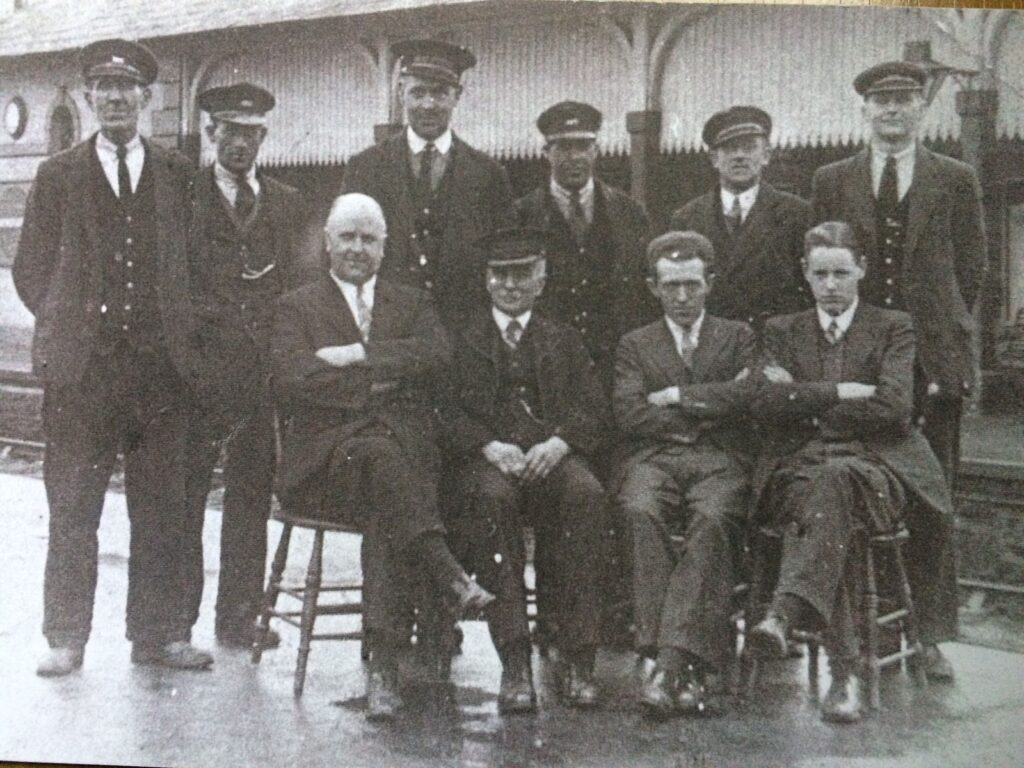
Sam left France in February/March 1919 and was finally discharged from th4e army in May 1919. He returned to his native Magherafelt and settled into civilian life, finding employment as a railway porter with the London, Midland and Scottish Railway Company.
In December 1923, Sam married Elizabeth Wallace and the couple settled into married life at Killyfaddy, Magherafelt. Their home was one of six purpose built ‘soldiers cottages’.
However, sadly, less than a year later, on 24 November 1924, Sam returned home from work to find Elizabeth dead. The coronr’s report (as detailed on her death certificate) stated ‘that deceased Elizabeth Watson died on 24th November 1924 from cardiac failure owing to excessive vomiting and fatigue, being pregnant…’
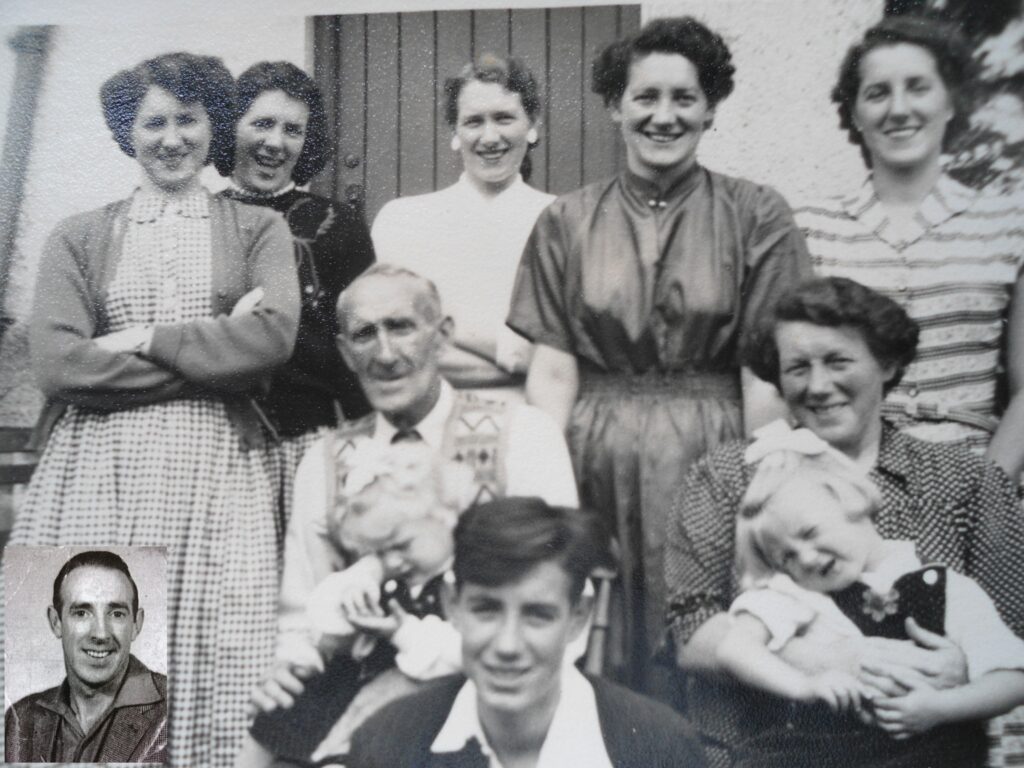
On 3 June 1927, Sam married Annie Bradley and the couple had seven children:
Robert John (Bobby) – born 5 May 1928
Anna Margaret – born 26 June 1930
Shelia – born 13 October 1931
Mary – born 1 May 1933
Onagh – born December 1934
Doreen Elizabeth Carson – born 14 Octobry 1939
Samuel Kennedy – born 5 November 1941
Sam suffered poor health towards the end of his life and died on 7 May 1958. He is buried at St Swithin’s Church of Ireland, Magherafelt. His widow, Annie, continued to live at the family home in Killyfaddy until her health failed also and she moved into the home of her daughter, Sheila, where she died 5 February 1984.