

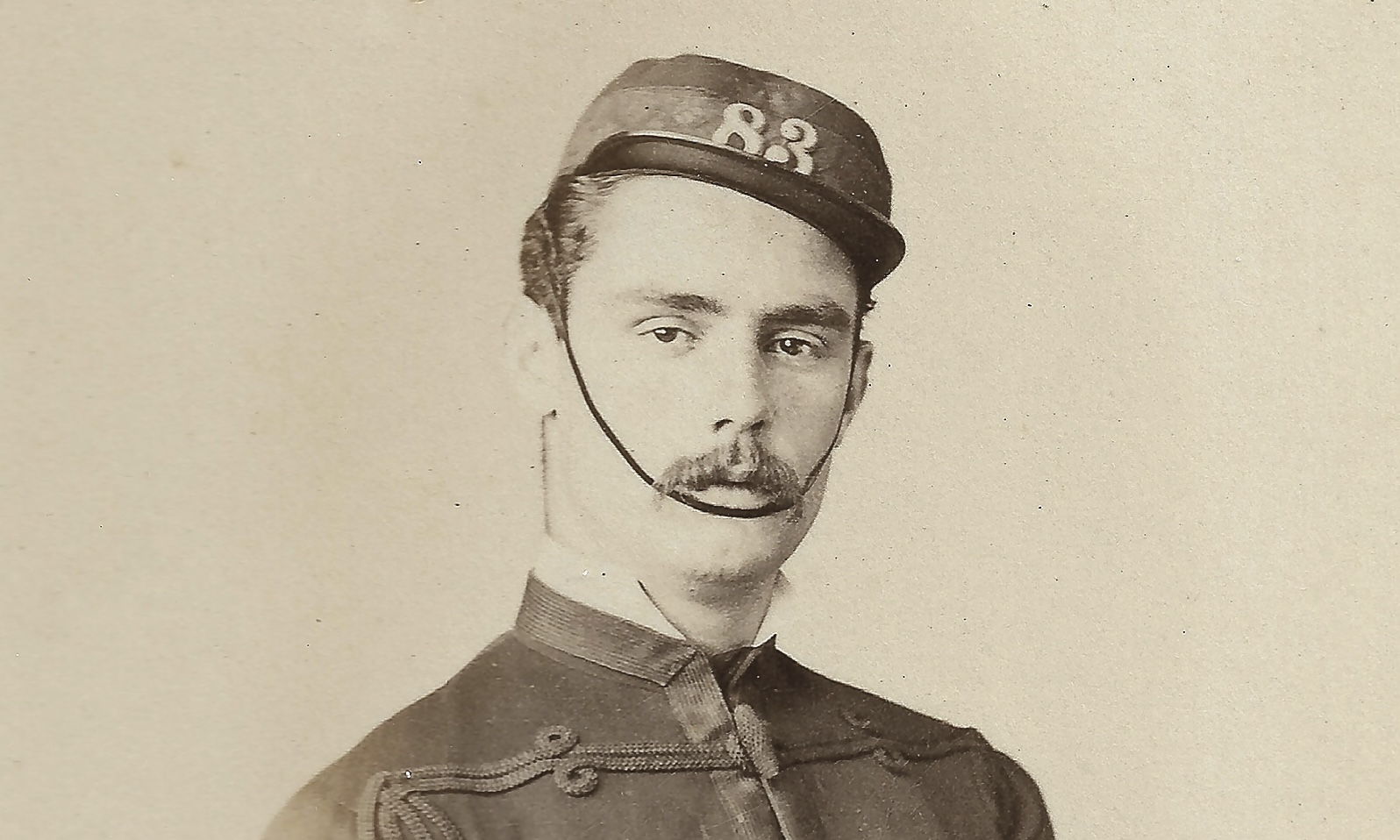
83rd Regiment of Foot – Poona Horse – Afghan War 1878-80 – Sudan 1885
Born 27th May 1847 at Bristol, the only son of Major James Anderson 1783-1850 and his wife Eliza Catherine Anderson (nee Dick) 1824-1868.
Following his formal education at Marlborough Boys College, James purchased a commission as Ensign in the 83rd (County of Dublin) Regiment of Foot 25th April 1868. Travelling to Gibraltar, James joined his new regiment who had been garrisoned there since April 1867. On 5th January 1870, James was promoted to Lieutenant by purchase, only weeks before the regiment left Gibraltar for India.
In March 1874, James passed the special examination laid down in the Horse Guards General Order No 65, giving James the necessary qualifications to join a cavalry regiment. At around this time, James joined the Poona Horse, a cavalry regiment in the Indian Army.
By July 1880, James was a Captain serving with the headquarters of the Poona Horse, part of the garrison of Kandahar Afghanistan. On 27th July 1880, a British force commanded by Brigadier-General Burrows was defeated at the Battle of Maiwand, by an Afghan army led by Ayub Khan.
News of the defeat of Burrow’s forces at Maiwand arrived in Kandahar at about 3am, forty-five miles from the city. In response to the news, preparations were hurriedly made to send another force of troops from Kandahar, to assist and protect the retreating survivors of the battle.
That force and their actions that day, were described in despatches written by Brigadier-General Henry Francis Brooke 8th August 1880. Singled out for special mention were the actions of Captain James William Anderson and the 40 sabres under his command.
Following the defeat at Maiwand, the surviving soldiers, aided by Brooke’s forces, managed to return to Kandahar. There they formed part of the garrison that was besieged by Ayub Khan’s victorious army. The nearest reinforcements were hundreds of miles away in Kabul and in Quetta, where forces commanded by General Roberts and Brigadier General Phayre were to be found. During the siege that followed, the Poona Horse was employed every day on covering and working parties. The regiment also took part in the affair at Khairabad and the sortie to Deh Khwaja.
The nearest reinforcements were hundreds of miles away in Kabul and in Quetta, where forces commanded by General Roberts and Brigadier General Phayre were to be found.
In what has become known as an amazing feat of endurance, General Roberts managed to march the 10,000 troops at his disposal, some 300 miles across some of Afghanistan’s harshest terrain, in just three weeks. Arriving in Kandahar 31st August 1880, General Robert’s was keen to attack Ayub Khan’s army without delay. The Battle of Kandahar started the next day, the British and Indian forces totalled 11,000 men and 32 guns in the field, against Ayub Khan’s 15,000 Afghan regular troops, tribesmen and 32 guns.
In a decisive battle that lasted less than 24 hours, the British had captured all of Ayub Khan’s guns and forced the Afghan Army to withdraw from the field. During the battle, the Poona Horse was out with the Bombay Cavalry Brigade, under Brigadier-General Nuttall, and when the enemy was retreating, was detached to prevent stragglers escaping through the Kotah-i-Murcha Pass. British and Indian casualties were 250 killed and wounded, while Afghan casualties were estimated to be 2,500 killed, wounded, and captured.
On 8th September 1880, Headquarters and 200 sabres of the Poona Horse marched as part of Brigadier-General Daubeny’s Brigade to Maiwand, for the purpose of searching for arms and prisoners, and burying the dead.
In the 19th Century, the health of the British Army in India faced significant challenges. The subcontinent’s harsh climate, coupled with unsanitary living conditions, led to widespread health issues among the troops. Tropical diseases such as malaria, cholera, dysentery, and typhoid were rampant, posing a constant threat to the soldiers. Conditions in the field were particularly demanding, with the added physical and mental demands of warfare, combined with periods where the supply of clean water and good food were not always available.
By September 1880, James had been in India for ten years, and on active duty in the field for over six months. It seems that by November 1880, James had fallen seriously ill. On 11th November, the Bombay Government Gazette reported:
that Captain J W Anderson Staff Corps Squadron Officer Poona Horse (Officiating Brigade Major Cavalry 1st Division) Southern Afghanistan Field Force is allowed furlough to Europe for 18 months on medical certificate.
By 1882, his health sufficiently restored, James returned once again to India where he took up command of the 3rd Squadron of the Poona Horse. In January 1883, James was asked to officiate as the Deputy Assistant Quartermaster General at Bombay.
In 1885, James was seconded for service with the transport department of the Saukin Expedition to the Sudan. It was announced that a camel corps would be formed at Aden for service in the Sudan, the work of organising the corps being entrusted to Captain J. W. Anderson, who by this time was Deputy-Assistant Quartermaster-General Bombay.
Returning to India from the Sudan, James rejoined the Poona Horse, who in November 1885 were designated the 4th Bombay Cavalry, and in 1890 the 4th (Prince Albert Victor’s Own) Bombay Cavalry (Poona Horse).
In February1888, James was granted one years leave out of India on “personal affairs”, and in September 1889 extended by a further 6 months on “medical grounds”. Returning to duty in India in March 1890, James was promoted to Major and to be second in Command of the 4th Bombay Cavalry (Poona Horse).
Having spent three more years in India, James now 46 years old, was granted another year’s leave of absence 18th May 1893 reportedly on “private affairs”, but almost certain on medical grounds. Intending to return to England, James was a passenger on the French mail boat “La Seyne,” due to leave Karachi 13th May and bound for Aden.
The Madras Weekly Mail published the following report in their 31st May 1893 issue:
“Major J. W. Anderson, who was for some time in command of the Poona Horse, died from dysentery on board the French Mail boat La Seyne in Aden Harbour on the 18th instant. He was buried with full military honour’s the following day.”
The Western Morning News carried the following obituary in their 6th June 1893 edition:
“News has been received of the death at Aden, while on his way home from India, of Major J. W., Anderson, Indian Staff Corps, at the age of forty-six years. The deceased, who entered the Army in
1868, had seen considerable war service. He served with distinction in the Afghan campaign of 1879-80, being present at Kairabad, Maiwand, Candáhar, Deh Khoja, and the battle of Sept. 1, for his gallant behaviour in which he was mentioned in despatches, and granted the medal, with clasp. He also served in the Soudan campaign.”
During the 19th century, disease, illness, and climatic conditions were the leading causes of death among British soldiers, far exceeding battlefield casualties. In India, tropical diseases such as malaria, cholera, and dysentery were endemic. It is estimated that more than 20,000 British soldiers died in India from disease in the early to mid-1800s.
James Anderson was just one of the many thousands of British soldiers, who lost their lives overseas during the 19th Century to disease and illness, in the service of Queen and Country.
For a more in-depth story of James William Anderson’s life, including detailed accounts of his actions during the Afghan War, plus more photographs, click here
Researched and written by Gary Hynard 2025
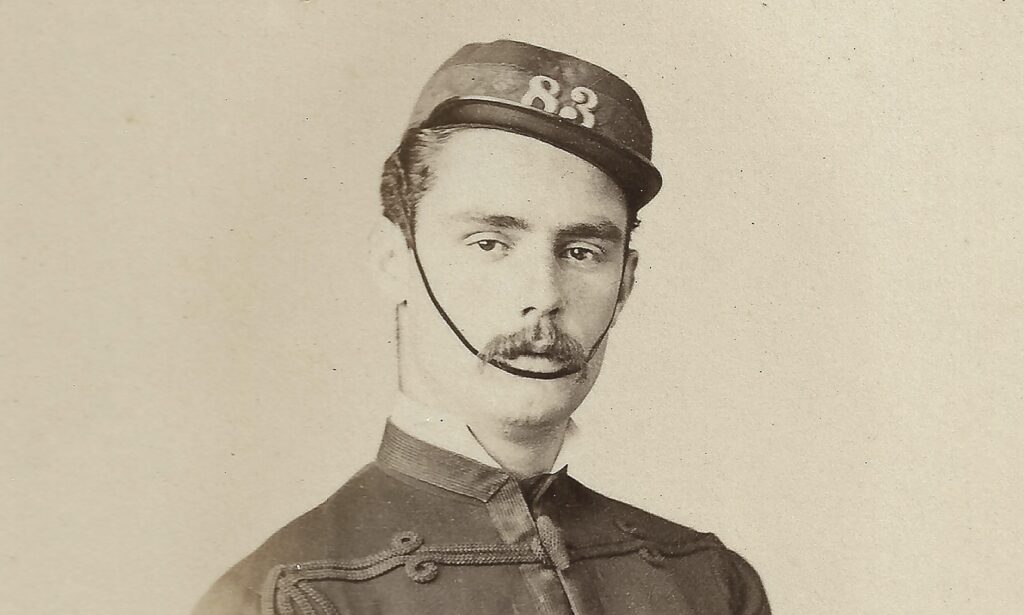
Ensign James William Anderson Gibraltar circa 1870