

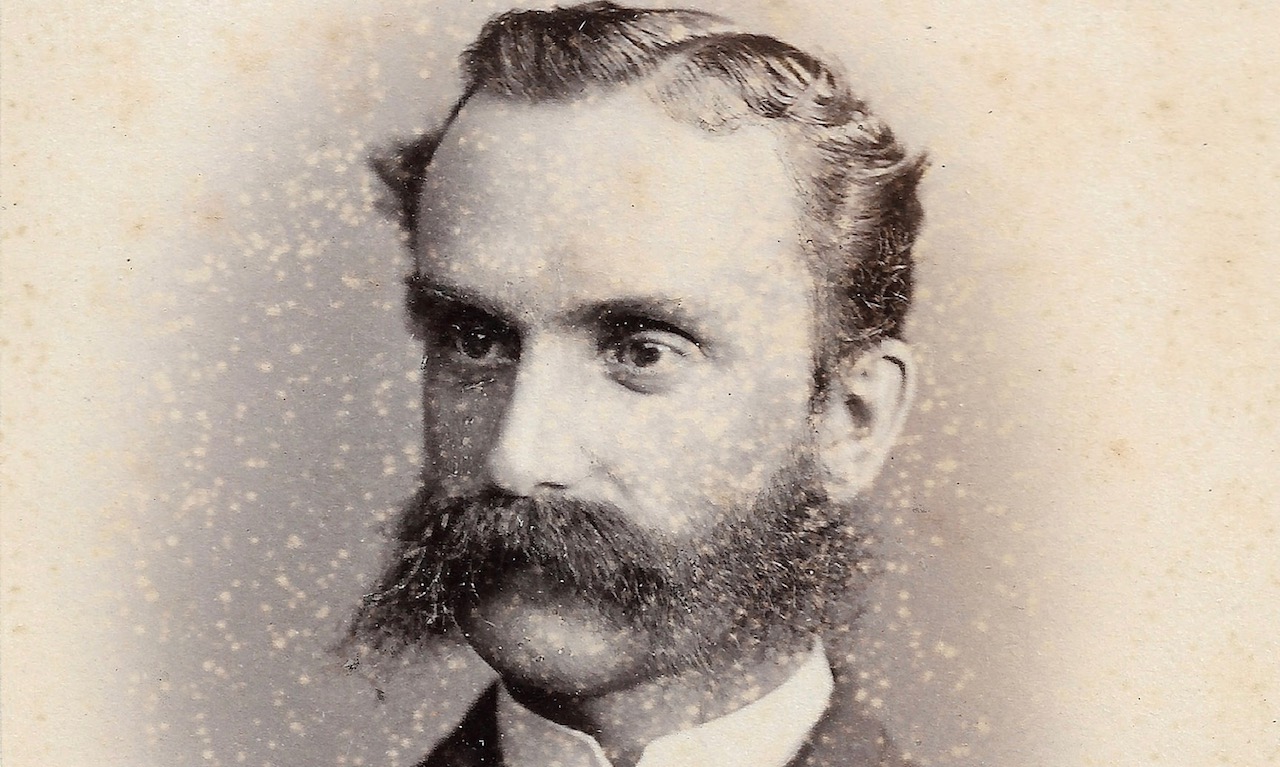
Indian Mutiny – First Boer War – CO 1st Battalion Royal Irish Rifles
Frederick Karslake was born 13th June 1840 Meshaw Devon, the son the Reverend William Heberden Karslake 1816-1896 and his wife Mary Burgess Karslake 1813-1889.
Attending the Royal Military School at Sandhurst, Frederick successfully completed his qualification for a commission to Ensign before a Collegiate Board held in June 1857. On 19th June 1857, Frederick joined the 83rd (County of Dublin) Regiment of Foot as Ensign “without purchase”, he was just seventeen years old.
Earlier in the same year, an uprising within the Bengal native army occurred in British ruled India. The rebellion grew quickly and with the British reacting slowly, it soon spread encouraging further Indian regiments to join the rebellion. Over the next two years, the British army fought a series of battles and engagements with rebel forces, brutally suppressing the uprising and carrying out harsh reprisals against Indian mutineers and civilians suspected of supporting the rebellion.
On 2nd September 1858 Frederick was promoted to Lieutenant by appointment.
For his part in the Indian War 1857-59, Frederick and the other officers and men of the 83rd Regiment who had been engaged with the enemy during the mutiny, were presented with the Indian War Medal in 1861.
In the following year, the regiment returned to England where it assumed garrison duties for the next five years.
In October 1863, Frederick was promoted to Captain by purchase, and then in January 1866, returned with the regiment to Ireland. During its stay in Ireland the regiment was distributed Headquarters at the Curragh Barracks Kildare, three companies in Armagh, one company in Monaghan, two companies in Sligo and two companies in Boyle.
In March 1867, the regimental depot companies moved to Colchester, while in April the rest of the regiment embarked at Kingstown and were conveyed by the troopship “Himalaya” to Gibraltar. Relieving the 86th (Royal County Down) Regiment of Foot in the Casemate Barracks, the 83rd Regiment would spend the next 3 years at Gibraltar on garrison duty.
Having served their time at Gibraltar, the 83rd Regiment embarked the troopship “Tamar” in March 1870, at the beginning of their journey to India. Arriving at Bombay 8th April 1870, the regiment then continued to Poona where it was quartered in Wanourie Barracks. Poona, located 120 miles southeast of Bombay in the western state of Maharashtra, was one of the most important military and administrative centres for the British in India in the 19th century.
During the next 10 years that Frederick was with the 83rd Regiment stationed in India, he was promoted to Brevet Major in 1877, and then in October 1879 to Major.
Towards the end of 1880, the regiment was ordered to proceed to England. In January 1881, however, the regiment was diverted to Natal in South Africa, where an outbreak of hostilities with the Boers would see the 83rd Regiment on active field service.
In July, the 83rd Regiment became the 1st Battalion Royal Irish Rifles, under the Childers reforms. After spending much of its time on rear-area labouring duties in South Africa, the Battalion returned to England in January 1882.
Having returned from South Africa, Frederick was promoted to Lieutenant Colonel in the same year, and in October 1884 took command of the Battalion. In 1886, Frederick was promoted to Colonel before retiring in February 1887, having served 30 years with the 83rd (County of Dublin) Regiment of Foot, and then the Royal Irish Rifles.
Frederick retired from the army with an honorary rank of Major General.
In retirement, Frederick lived in Westminster, London, until his death in 1916 at the age of 75.
Shortly after his death, the depot orders of the Royal Irish Rifles Belfast contained the following:
“The commanding officer regrets to announce the death of Major General F Karslake, who joined the 83rd Regiment in June 1857, commanding the 1st Battalion the Royal Irish Rifles from 1884 to 1887. Major General F Karslake served in the Indian Mutiny, siege and capture of Kotah, affair at Sanganeer, and defeat of Gwalior rebels at Kotaria, South African War 1881, and also with Natal Field Force”.
Frederick’s funeral took place 10th April 1916 at the Kensal Green Cemetery, London, where he was laid to rest in the family grave.
For a more in-depth story of Frederick Karslake’s life, including the part he played in the Indian Mutiny 1957-59, and for more photographs, click here
Researched and written by Gary Hynard 2025
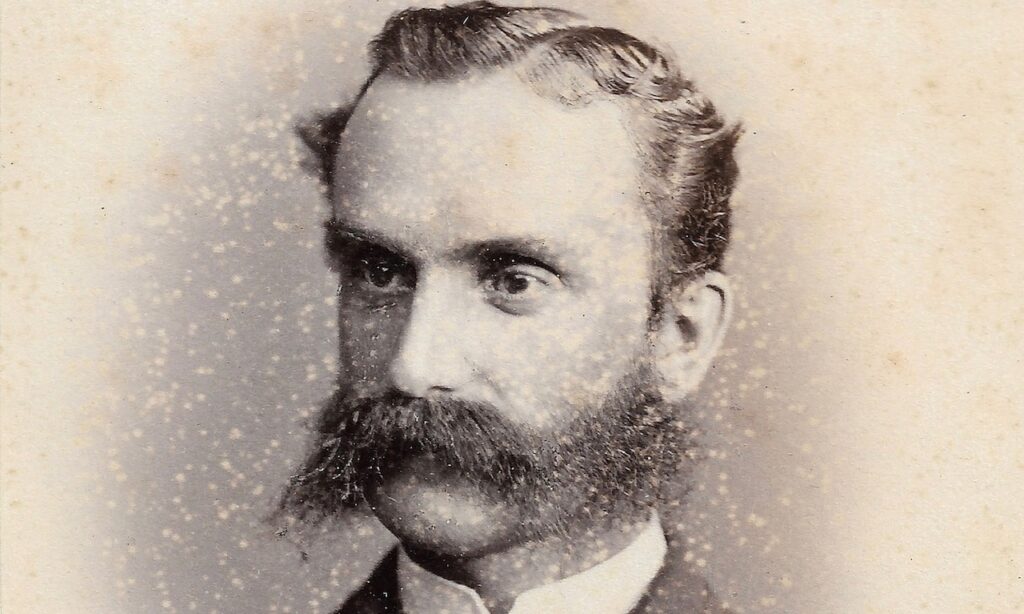
Captain Frederick Karslake – Bombay Circa 1874