

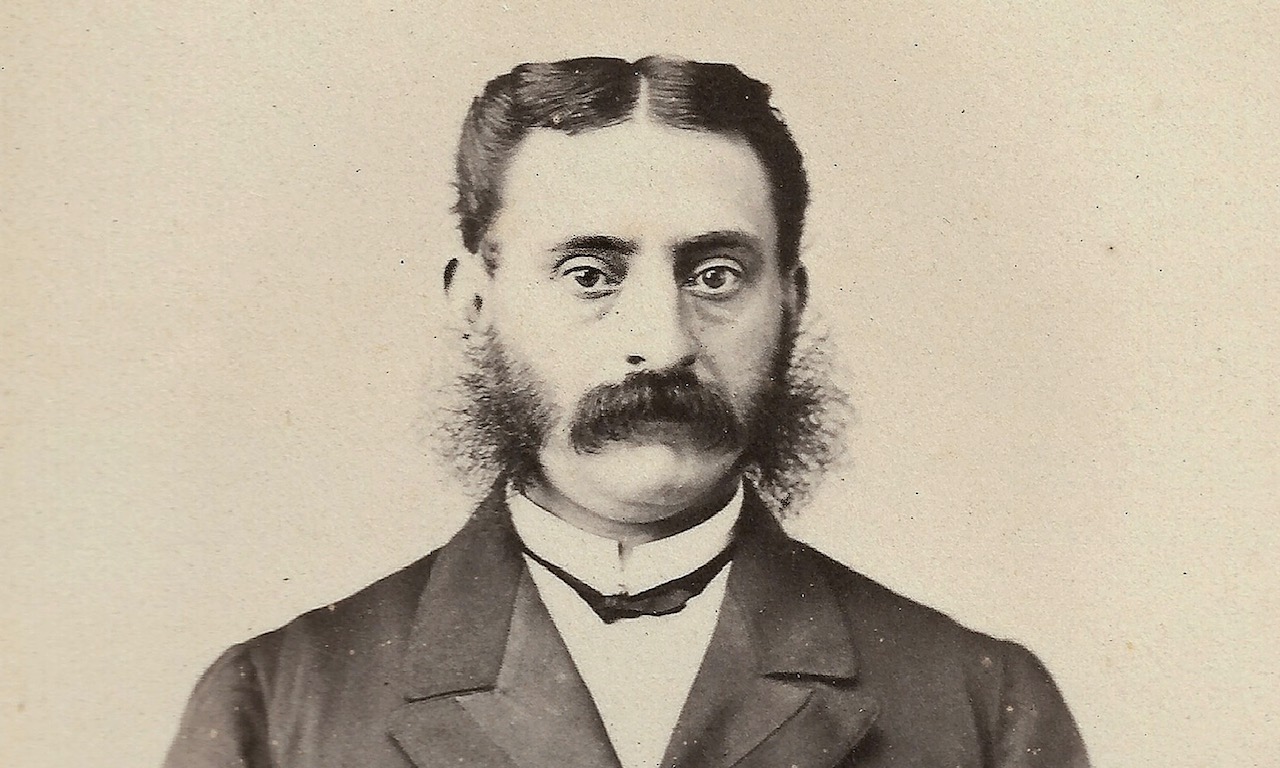
83rd (County of Dublin) Regiment of Foot – 34th (Cumberland) Regiment of Foot
96th Regiment of Foot
Nicholas Pennefather was born 8th May 1834 at Cashel, County Cork, Ireland, son of Edward Pennefather 1788-1871 and Mary Pennefather (nee Mansergh) 1790-1844.
Having studied at the Dublin Military Academy, Dublin, Nicholas Pennefather attended the Royal Military College, Sandhurst, Surrey, passing his entrance examinations for the army 16th October 1855. The following year Nicholas joined the British army, purchasing a commission as Ensign in the 83rd (County of Dublin) Regiment of Foot, 19th August 1856.
Nicholas joined the 83rd Regiment’s depot companies at Chatham, Kent, in December 1856.
In May 1857, the War Office ordered the 83rd Regiment companies to hold themselves ready to join their headquarters in India. Earlier in the year, an uprising within the Bengal native army occurred in British ruled India. The rebellion grew quickly and with the British reacting slowly, it soon spread, encouraging further Indian regiments to join the rebellion. With only 35,000 British soldiers on the whole of the Indian subcontinent widely scattered, British reinforcements were needed urgently.
Between July and October 1857, a total of 84 troopships left England bound for India, carrying a total of 32,600 troops. On one of those ships, the “Sedgemoor,” was the newly commissioned Ensign Pennefather, together with 134 other officers and men sent to reinforce the 83rd Regiment, already on active field service in India.
Arriving in India in January 1858, Nicholas was promoted to Lieutenant by purchase.
Nicholas soon found himself in action, one of the 4,500 men that made up the British forces sent to re-take the fortified city of Kotah. Having captured the city by 30th March, a smaller force of 900 British troops separately engaged an estimated rebel force of 8,000 men near the village of Sanganeer in early August. Having inflicted heavy casualties on the rebels, nightfall allowed the rebels to withdraw.
On the 14th August 1858, the 83rd Regiment once again engaged a large enemy force, this time near the village of Kotaria. By evening, the 83rd had sustained a small loss of 22 killed and wounded, while the enemy over one thousand left dead on the field.
In 1861, with the Indian Mutiny (1857-59) put down and British rule restored throughout India, Nicholas and the other officers and men who had been engaged with the enemy during the mutiny, were presented with the Indian War Medal.
In the following year, the regiment returned to England where it assumed garrison duties for the next five years.
On 2nd August 1864, Nicholas married Catharine Butler, only child of the late Thomas Butler of Hythe, Kent.
In January 1866, the regiment who had been in England for four years returned to Ireland, where it stayed for the next 14 months.
In March 1867, the depot companies of the 83rd Regiment were moved from Dublin to Colchester in England. In April, the regiment embarked the troopship “Himalaya” at Kingstown, Ireland, from where it was transported to Gibraltar.
On 17th April 1867, Nicholas was promoted to Captain by purchase with the 83rd Regiment. In November 1867, however, Nicholas exchanged with a Captain J F Wyse from the 34th (Cumberland) Regiment of Foot.
From November 1867, the 34th Regiment was stationed at Portsmouth, Aldershot, and then Shorncliffe, Kent, until in September 1871 the regiment was transported to Ireland. In Ireland, the regiment was spread amongst different locations including Dublin, Newry, Kilkenny, Waterford, and Clonmel.
In April 1874, Nicholas was appointed Aide-de-Camp to Sir Richard Dennis Kelly KCB General Officer commanding Cork District in Ireland. In September 1875, Nicholas was appointed Staff Officer of Pensioners at Waterford Ireland, a position he held for 4 years.
In June 1879, Nicholas was appointed as a Captain in the 96th Regiment of Foot, and in September was promoted to Major.
On 18th March 1882, Major Nicholas Pennefather retired from the army with the honorary rank of Lieutenant Colonel.
By 1891, Nicholas and his wife Catherine were living at High Street, New Romney, Kent, England.
Lieutenant Colonel Nicholas Pennefather died 12th February 1905 at his home Green Court, New Romney, Kent. He died of Pneumonia, following a bout of influenza. Nicholas was buried at St Nicholas’s Churchyard, New Romney, Kent.
For a more in-depth story of Nicholas Pennefather’s life, including the part he played in the Indian Mutiny 1857-59, and for more photographs, click here
Researched and written by Gary Hynard 2025
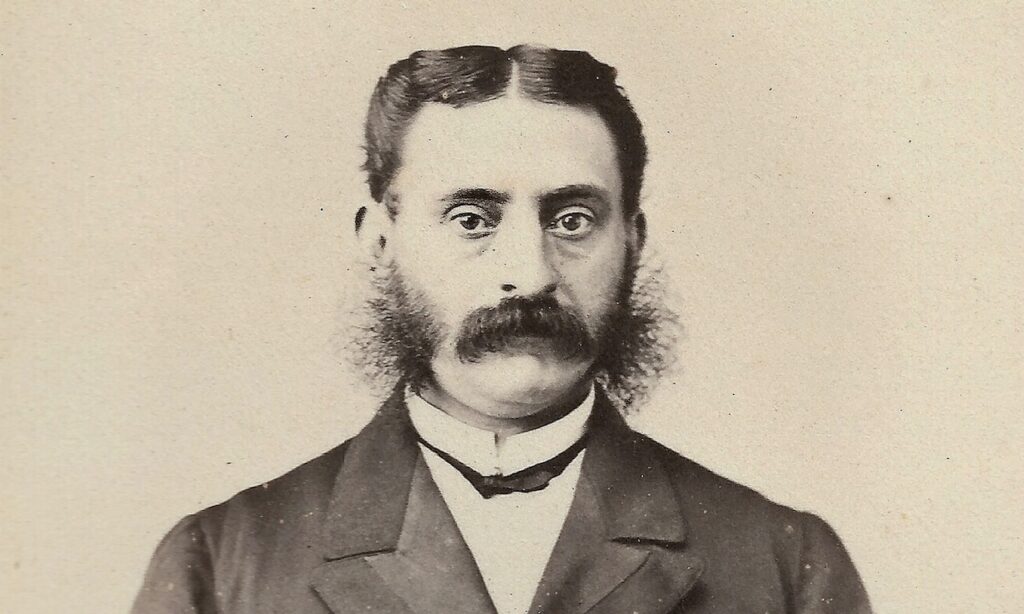
Captain Nicholas Pennefather - Gibraltar 1867