

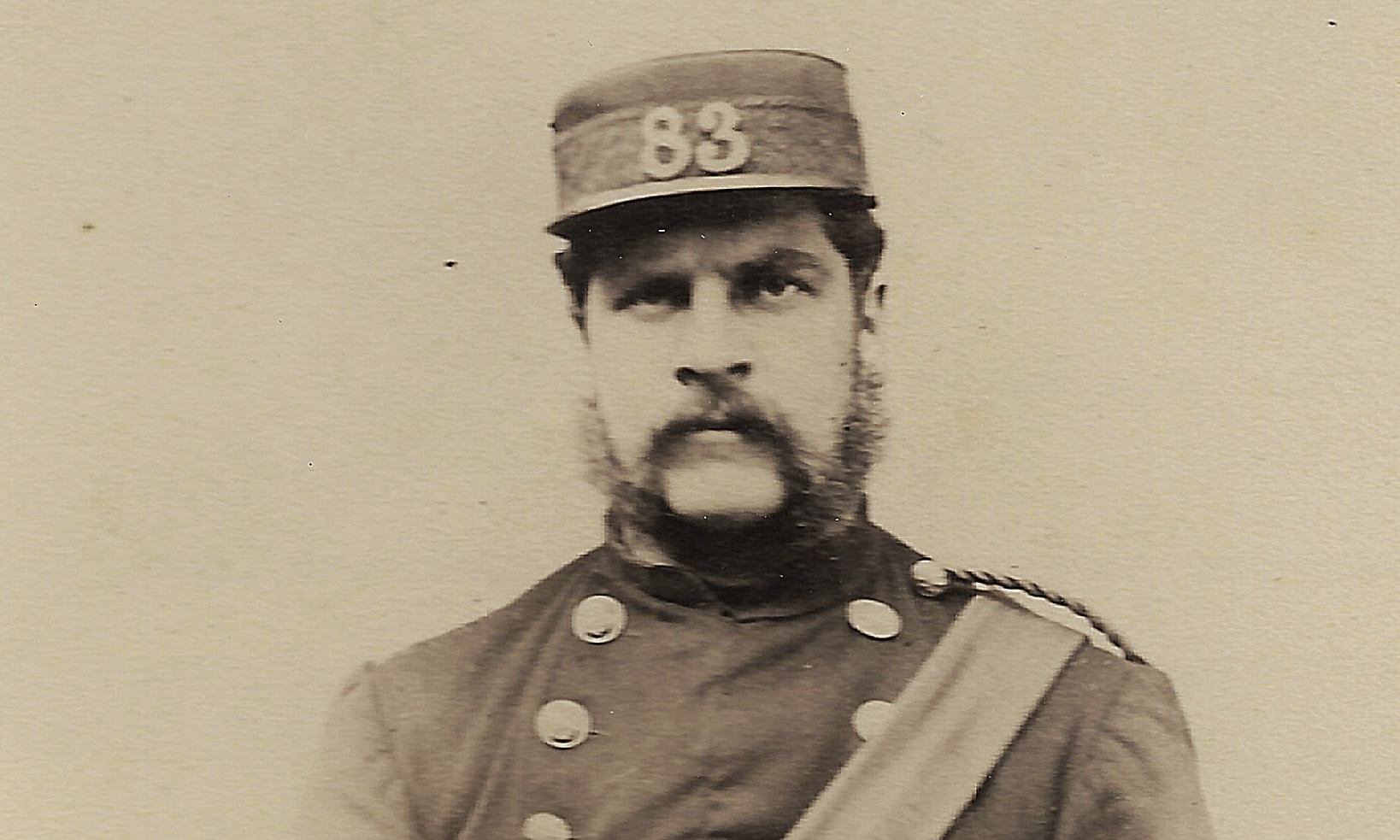
83rd (County of Dublin) Regiment – 59th (2nd Nottinghamshire) Regiment –
Anglo-Afghan War 1878-1880
Littleton Albert Powys was born 27th July 1840 at West Bromwich, Staffordshire, the eldest son of the Reverend Littleton Charles Powys 1790-1872 and Amelia Powys (nee Moilliet) 1802-1890.
Growing up in Dorset, Littleton attended Sherborne School 1855-57, where he excelled in sports.
In October 1858, Littleton was gazetted as Ensign in the 83rd (County of Dublin) Regiment of Foot, and proceeded shortly afterwards to Bombay, where he joined the Headquarters of the regiment. He served with the 83rd Regiment at various stations throughout India, being promoted to Lieutenant in December 1860.
In 1862, the regiment returned to England where it assumed garrison duties for the next five years.
Having spent four years in England, the regiment embarked at Liverpool in January 1866 and returned to Ireland. The following month Littleton was promoted to Captain. During its stay in Ireland the regiment was distributed Headquarters at the Curragh Barracks, Kildare, three companies in Armagh, one company in Monaghan, two companies in Sligo and two companies in Boyle.
It was common practice at this time for officers to exchange regiments to increase their chances of promotion, or for those looking to take advantage of a particular posting.
In December 1866, perhaps seeking a more exotic posting, Littleton exchanged into the 59th (2nd Nottinghamshire) Regiment of Foot, also garrisoned in Ireland at this time. Four months later, the 83rd Regiment left Ireland, taking up garrison duties at Gibraltar, where it would spend the next three years.
On completing its tour of home service, the 59th Regiment embarked Kingstown Ireland in September 1867, bound for Colombo in Ceylon. In March 1869, the Troopship “Malabar” arrived at Bombay carrying over one thousand officers, men and families of the 59th Regiment from Ceylon.
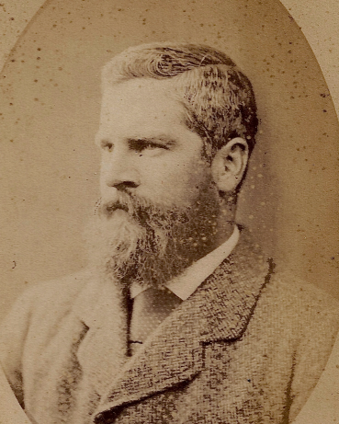
Captain L A Powys - circa 1876
In 1870, Littleton Powys was granted 15 months leave to return to England on what the newspapers described as “private matters”. The term “private matters” was often used as a euphemism for sick leave, hiding the fact that many officers needed to return home for treatment or to recover from illness.
In the 1870s, the health of the British Army in India faced significant challenges. The subcontinent’s harsh climate, coupled with unsanitary living conditions, led to widespread health issues among the troops. Tropical diseases such as malaria, cholera, dysentery, and typhoid were rampant, posing a constant threat to the soldiers.
Littleton returned to India in October 1871.
By May 1877, Littleton had spent almost ten years in Ceylon and then India. During this time, his health had suffered to such an extent that he was ordered back to England for a second time. Granted six months sick leave, on this occasion he was required to appear before an army medical board, who would assess his fitness for duty.
Having returned to England, it seems that on hearing the first rumours of the impending war with Afghanistan, Littleton hurried back to India to rejoin his regiment.
In September 1878, Lord Lytton the Viceroy of India ordered a diplomatic mission to set out for the Afghan capital Kabul, where he hoped to establish a political resident. By establishing a British political mission in the Afghan capital, it was hoped that British India could control the foreign relations of this ‘buffer’ state and reduce Russian influence in the region. When however, the mission was turned back at the eastern end of the Khyber Pass, the British decided to replace the Afghan leader Sher Ali by force.
In November 1878, three British columns, consisting of 40,000 men, prepared to invade Afghanistan. One column was to march through the Bolan Pass and seize the city of Kandahar, a second to occupy the Ali Masjid fortress and secure the Khyber Pass before advancing to Jalalabad, while the third would advance along the Kurram Valley towards Kabul.
Littleton was promoted in the field to Brevet Major 30th December 1878.
The 59th Regiment, were part of the column for the Bolan Pass, and was present on 8th January 1879, when Lieutenant-General Donald Stewart’s force captured Kandahar without a struggle. In the months that followed, the occupation of the city was uneventful, even allowing the garrison to partake in social activities and sporting contests.
Towards the end of July, however, an outbreak of cholera had gripped the city of Kandahar. By early August, Littleton to had been stricken with the disease, and at the age of 39 he died 6th August 1879. Littleton was buried that evening in Kandahar cemetery by the Eidgah Gate. It is estimated that over 400 men died from Cholera during the outbreak in Kandahar in 1879.
A monument in the Kandahar cemetery, erected by the regiment, stands as evidence of the high regard in which he was held by its members. It read:
“Genial, generous, gentle, and kind” - to quote the words of the little Journal published at Kandahar “the heart and soul of his regiment, his loss will be felt not more by his brother officers than by the non-commissioned officers and men, whose welfare and happiness were equally his own”.”
For a more in-depth story of Littleton Albert Powy’s life, including the thoughts of his headmaster on the news of him joining the army, the part he played during the occupation of Kandahar in 1879, and for more photographs, click here
Researched and written by Gary Hynard 2025