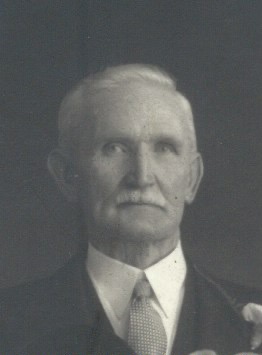
Family oral history is so important, more so beyond the grave. This hit home in March 2025 as a message popped up seeking information about my great-grandfather Michael McErlean over 87 years after his death.
It was from the Linfield Graves Project founder Michael Cockcroft in Northern Ireland who works in finding and restoring the graves of former Linfield FC players.
The charity was searching for the burial place of my great-grandfather Michael McErlean who was born in Shankhill, Belfast, 1868 and died on 25 March 1939.
Mr Cockcroft had found newspaper archives announcing Michael’s passing and insights into his military and football history.
We learned that he had played for Linfield Football Club in Belfast from 1891-1894 as a centre forward.
He scored in the 1894 Irish Cup Final against Distillery in the Whites 3-2 victory. In the 4 matches against Distillery that season, Michael scored 7 goals.
He was a 40-year career soldier with the Royal Irish Rifles (RIR).
During that time, he left Belfast and was stationed in Brighton. Playing for the RIR team, Michael helped them win the Sussex Cup and the Brighton Shield. The following year he was back at Victoria Barracks as a sergeant and signed for Belfast Celtic. He played in Celtic’s first ever Irish League match. Not long after his Belfast Celtic career, he was off to South Africa for the Boer War and was at the Siege of Ladysmith (1899-1900).
The newspaper stories also revealed that during the 1st World War he was deployed to France as quartermaster of the Seventh Service Battalion that formed part of the 16th Irish Division.
His final resting place was a mystery. More so that it was probably more than 9200 miles away from my home in Australia.
My original search started in Greater Manchester where my late grand-father Desmond was born and had lived.
Captain Michael had indeed lived in the area, but census records indicated he returned to Belfast.
He had maintained his interest in Irish football all his life and a mention of his Irish team selections in the Ulster Football and Cycling News, March 29, 1895, reveals “McErlean, Linfield’s well-known centre-forward, writes … the following team against Scotland.” And the newspaper concludes, “Mr M’Erlean was not far out”.
Good to know he was likeminded with selectors. No mean feat even today.
The only family story from my mother was that he had to eat his horse during the Siege of Ladysmith and that he tragically lost two children to typhoid during the siege.
Army history records a devastating typhoid outbreak and as rations dwindled the making of a nutrient-rich broth from slaughtered horses, dubbed ‘Chevril’.
I recalled a memory of my grandfather Des McErlean saying his father was a ‘pretty good footballer in his day’. I was aged about 20 and sadly had no inkling to find out more.
So started the search to find the final resting place of a deserving serviceman and footballer.
The first roadblock came quickly searching online the many public cemetery information sites such as Belfast City Council.
Being born in Shankill I though he may be buried there.
Belfast council sent me a link to search but advised that the Shankill Graveyard records were destroyed before it came into its ownership.
No leads but I did find one mention in PRONI Will Calendars.
A Captain Michael McErlean was residing at 65 Belfast Road, Bangor, when he died in 1939. He had served in the Royal Irish Rifles and received an army pension.
But still no record of his burial.
Using this PRONI information I contacted Ards and North Down Borough Council, and they provided a link to search Bangor cemetery sites. Still no result.
It was January 2026 and I found an email contact for Untold: The Museum Ltd who referred me to researchers at the Royal Ulster Rifles Museum. The researchers found two newspaper cuttings announcing the death of Captain Michael, but the articles did not mention any church service details and internment.
Despite the digital newspaper and internment records all our efforts came to naught.
But a few days later some great follow up news from the researchers at the Royal Ulster Rifles Museum who were not willing to give up.
They found the following death notice from the Belfast Telegraph dated 25 September 1939.
M’RLANE-March 25. 1939, at his residence Belfast Rd, Bangor. Captain Michael M’Erlane (late R.I.R.) in his 71st year. Interment Holywood on Monday.
The spelling was different, but I had found it was commonly used. Probably because in those times names tended to be written down as the person thought it sounded.
Using this information, I went back to Parks and Cemeteries at Ards and North Down seeking a recheck of their records. They replied:
“I have had a look through our Holywood records and have located your great-grandfather’s interment in our Holywood Priory Cemetery. He was a retired officer and passed at 71 from cardiac failure. He was buried on March 27th in the New Section in Plot 248.”
Finally enough detail for Michael Cockcroft to follow up with a graveyard visit.
Another twist the location specified the new section of Holywood Priory Cemetery.
He thought this was the more recent burials in the ancient Priory Cemetery.
Holywood New Cemetery to most is a totally different cemetery.
Another hurdle the first graveyard search only revealed deteriorated headstones and unmarked graves
Michael Cockcroft returned and spoke to council on the phone and they were most helpful.
They clarified that the new section of the Priory Cemetery is Holywood New.
The plot records they had were quite confusing, but they were confident the plot was directly opposite a double grave in the name of Galway.
Amazingly, the Galway grave can be seen on Google Street View.
Opposite there are a couple of unmarked plots and an old grave which has been broken in two.
It could be Captain Michael. The top half of the broken grave is visible on the map in 2008 leaning against the remaining half. From the latest 2023 map, it looked like it had gone.
On closer inspection of the image, it may have toppled over and is mostly buried.
Michael Cockcroft’s second inspection would reveal all. Or would it?
Michael Cockcroft sent me a wonderful video of the graveyard with one more twist.
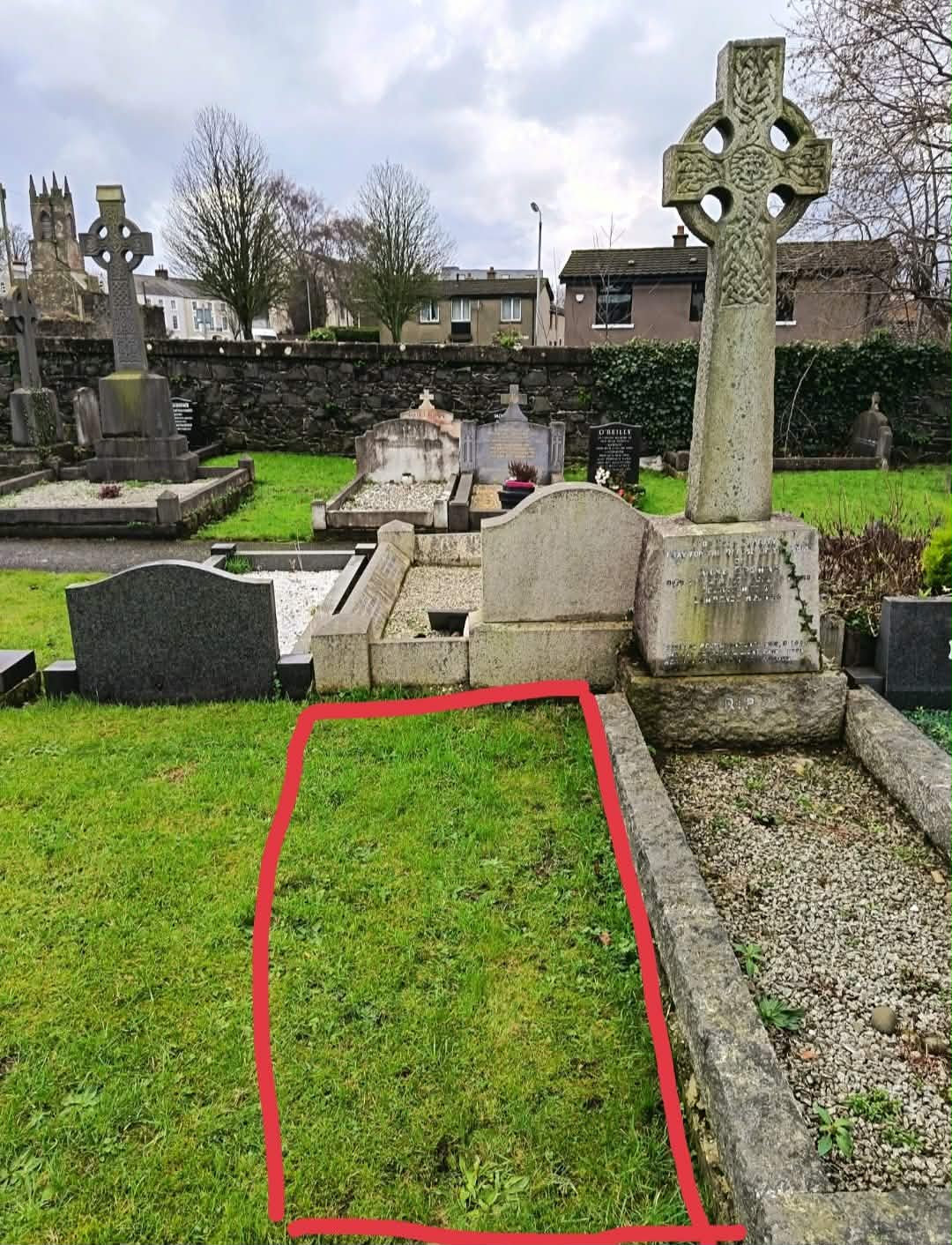
The plot with a fallen headstone opposite Galway was not Captain Michael. Thankfully he spotted another Galway and sure enough opposite was Plot 248 the unmarked grave of my great-grandfather.
Sad that it had been an unmarked grave all this time but jubilation for a kindred spirit.
A story in the Weekly and Ulster Examiner announcing his passing came to mind.
“Captain McErlean was always on the lookout for old friends to greet them and dispense hospitality”.
Sounds like a man after my own heart.
And from the Royal Irish Rifles: ‘Quis Separabit’ ‘Who shall separate’ (us).
Indeed, unbreakable bonds even after more than 87 years.
With special thanks to the Linfield Graves Project, Public Record Office of Northern Ireland, Untold: Stories of the Irish in the British Army, Royal Ulster Rifles Museum, Belfast, Burials and Cemeteries Ards and North Down Borough Council.
Photo gallery