
Introduction
There is a long history of animals serving in the British Army, in both official and unofficial roles.
Animals have served in armies across the world for thousands of years. Horses in particular have played an important role on and off the battlefield: pulling wagons, carrying soldiers, supporting cavalry charges, and participating in ceremonies.
When one thinks of duties army animals perform, they tend to be of a practical nature. The carrier pigeons used in the First World War may come to mind.
But there is another role in which animals in the army serve: as mascots and pets.
Official Mascots of the British Army
British Army regiments have had official and unofficial mascots since the 18th century. For example, the Royal Welsh Regiment has a goat named Billy, and the Staffordshire Regiment has a Staffordshire Bull Terrier. Mascots help reinforce regimental pride and a sense of regional identity.
Regimental mascots are more than just a morale-boosting tradition; they are working animals and official members of military regiments. Unofficial mascots are like pets that soldiers take care of at their own expense, but official mascots are cared for via the Regiment’s pay roll.
Mascots also have a regimental number and rank. This means they can be promoted or demoted.
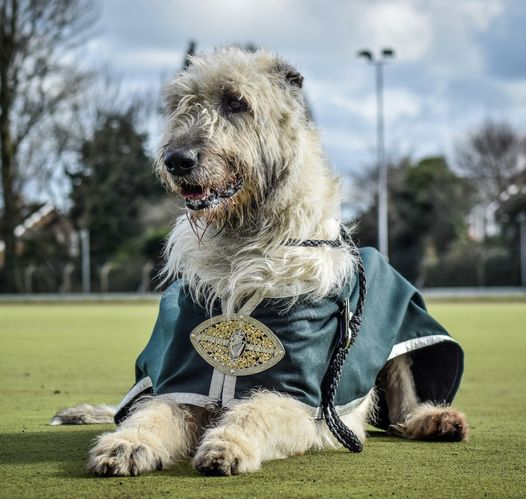
Brian Boru X 'Conri'
Brian Boru
Official Mascot of The Royal Irish Regiment
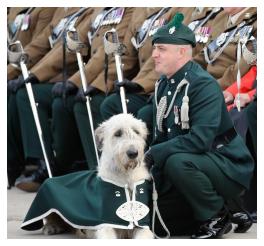
The Royal Irish Regiment has an Irish Wolfhound as their official mascot. It is a tradition that started with the Royal Irish Rangers in 1972 when Major Alistair Hayes gave a Wolfhound puppy to The Regiment to mark his retirement.
They named the dog Brian Boru I after the ancient High Irish King who ruled from 1002 to 1014 and is buried in Armagh.
There have been ten dogs since the Brian Boru I, and, when off duty, they all have individual nicknames. The current mascot, Brian Boru XI, is called ‘Bala.’

Brian Boru V 'Tallow' and her handler, 1980s
Brian Boru participates in official ceremonies and parades in the official uniform. The official uniform is a piper green coat with silver lace and the regimental badge on either flank. It also includes two dark brown leather collars, one with the Regimental cap badge and the other with the dog’s name engraved on a silver plate.
To complete the uniform, a silver brooch is worn at the neck of the coat made by silversmiths in Killyleagh, Co. Down. Finally, the mascot’s handler holds a silver braided lead. Mascots are also officially entitled to medals for their service.
Unofficial Mascots and Pets
Dogs and cats and bears, oh my!
Unofficial mascots are pets that The Regiment keeps and takes care of at their own expense. Sometimes animals are found at home near the barracks, or while deployed near camp or while out on patrol. While unofficial mascots may not have official numbers or titles, they still assist soldiers in many useful ways.
Billy the Brindled Bulldog
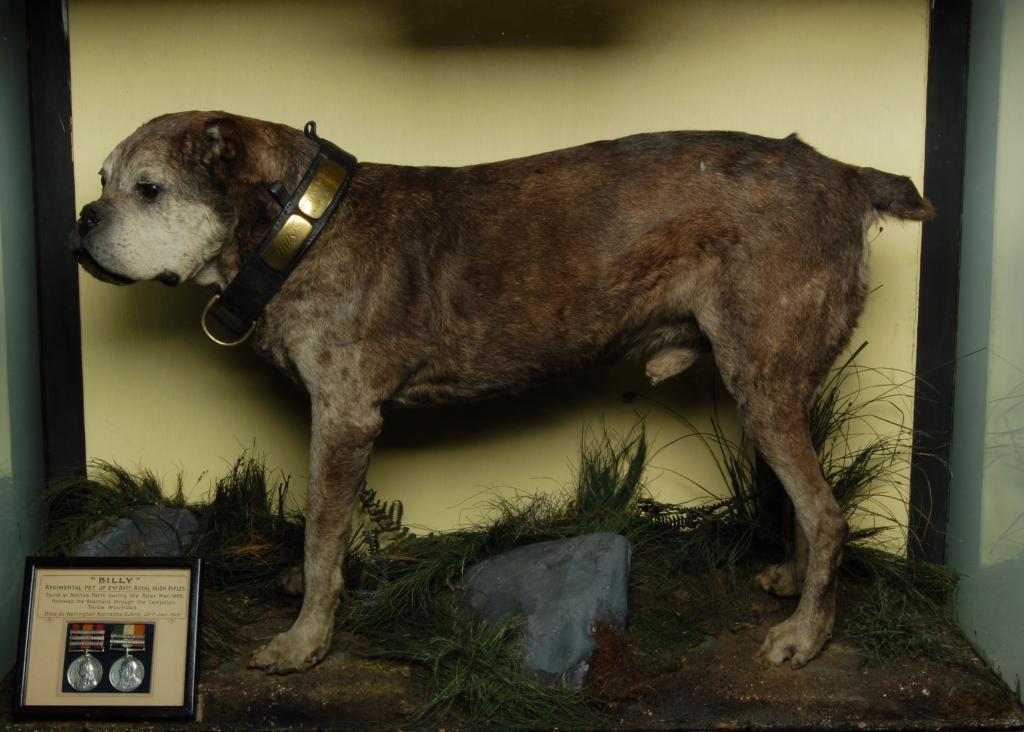
In addition to official mascots, some regiments may keep unofficial mascots or pets. One of the most well-loved pets was Billy who accompanied the 2nd Battalion of The Royal Irish Rifles.
In 1899, The Rifles were fighting in the South African War, or the Second Boer War. They adopted a Brindled Bulldog puppy they found at Botha’s farm in Transvaal. The Battalion named the dog Billy (or sometimes Billie), and he served with The Rifles in the war where he was twice wounded with shrapnel.
For his bravery and service Billy earned two medals: the Queen Victoria’s South African medal with three clasps and the King Edward VII South African medal with two clasps.
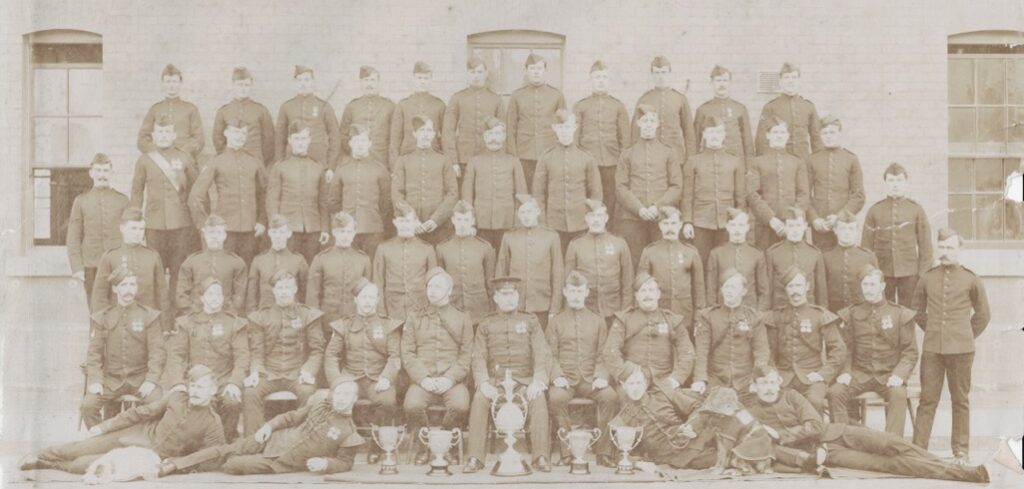
Billy pictured with The Regiment, circa 1902
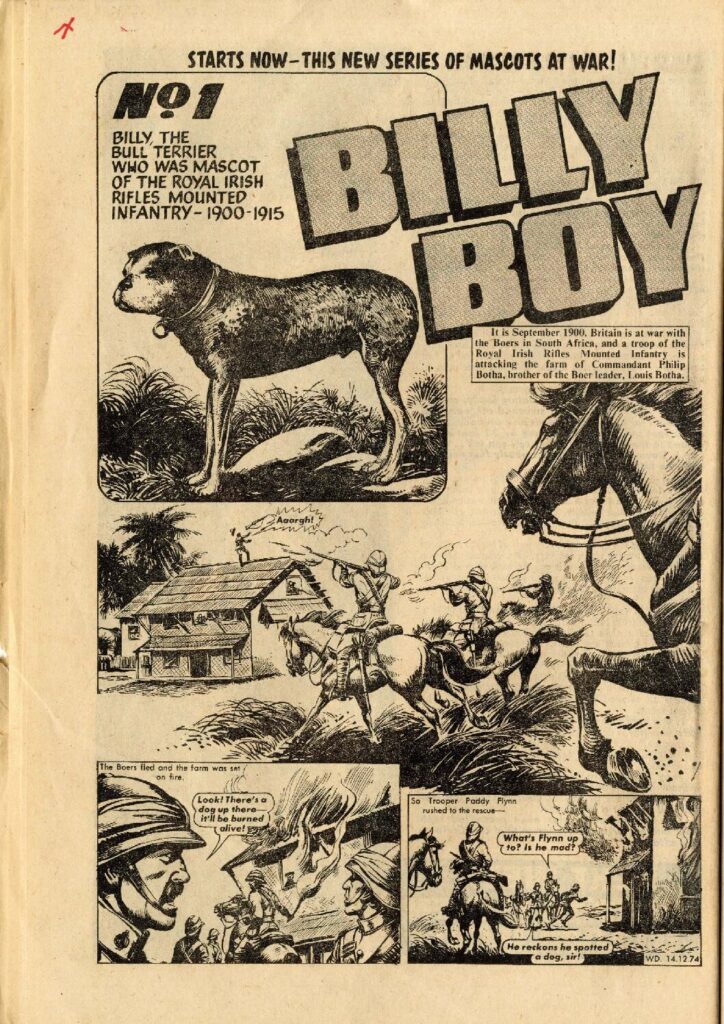
Cartoon from Warlord no. 12, December 1974
Billy’s bravery and loyalty in South Africa inspired one cartoonist to create this comic about his heroics. See the cartoon come to life here:

A Hero in Disgrace
In 1910 Billy was stationed at a barracks in Dover when an unfortunate incident occurred. As a result, Billy was publicly shamed and expelled from the army for disorderly behavior and assault.
The son of the local butcher was making his deliveries when he decided to taunt Billy by throwing rocks at him. So, Billy chased the boy through the town and bit him. As a result, Billy was discharged and forced into early retirement on a farm in Kent.
But his retirement did not last long. Public outcry at the unfair treatment of the war hero forced the army to reinstate Billy. He resumed his duties under the condition that he wear a muzzle in public.
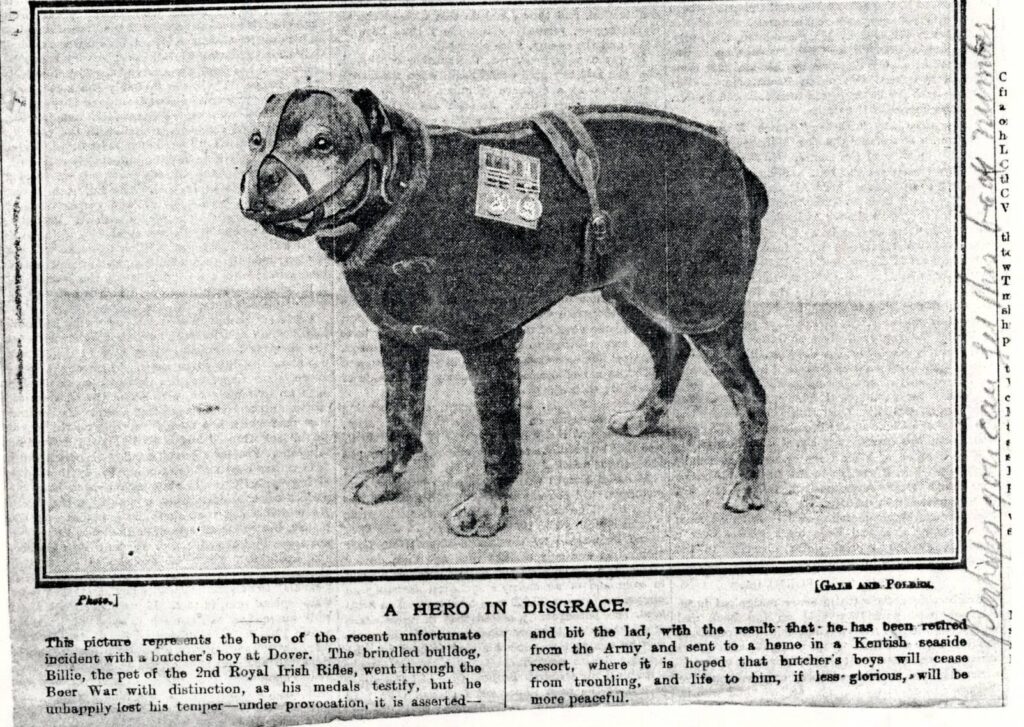
Billy wearing his muzzle
Billy served with The Rifles for fifteen years as an unofficial mascot, and he sometimes paraded at state functions with his jacket. Billy passed away at Wellington Barracks in Dublin at the age of 15.
The Rifles decided to preserve their faithful friend through taxidermy and kept him in their mess to honor and remember him. Billy the dog is now a part of UNTOLD’s collections and one of the most interesting objects in the museum.
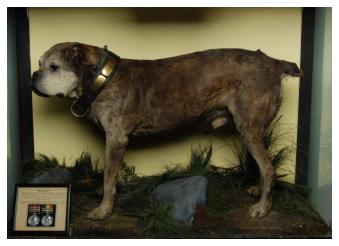
Billy in the museum
Flossie the Cat
Some army pets also serve practical purposes. For example, in the First World War many regiments kept cats in the trenches to hunt rats and boost morale. It is also said that cats could recognize gas attacks before humans due to their heightened senses.
During the First World War, the 1st Battalion of The Royal Irish Rifles had a cat named Flossie. While little is known about Flossie specifically, The Regiment kept the collar and brought it back with them after the war.
Bruin the Dog
The 6th Battalion of The Royal Irish Rifles also had a pet during the First World War. They had a dog they called Bruin. Unfortunately, there is not a lot of information about Bruin, but The Regiment also brought back Bruin’s collar which is saved in our collections.
Clearly, both Flossie and Bruin meant a lot to the soldiers they served with, hence why their collars and memory have been preserved. One of the most vital roles a mascot plays is to provide companionship and comfort to the soldiers they serve with.
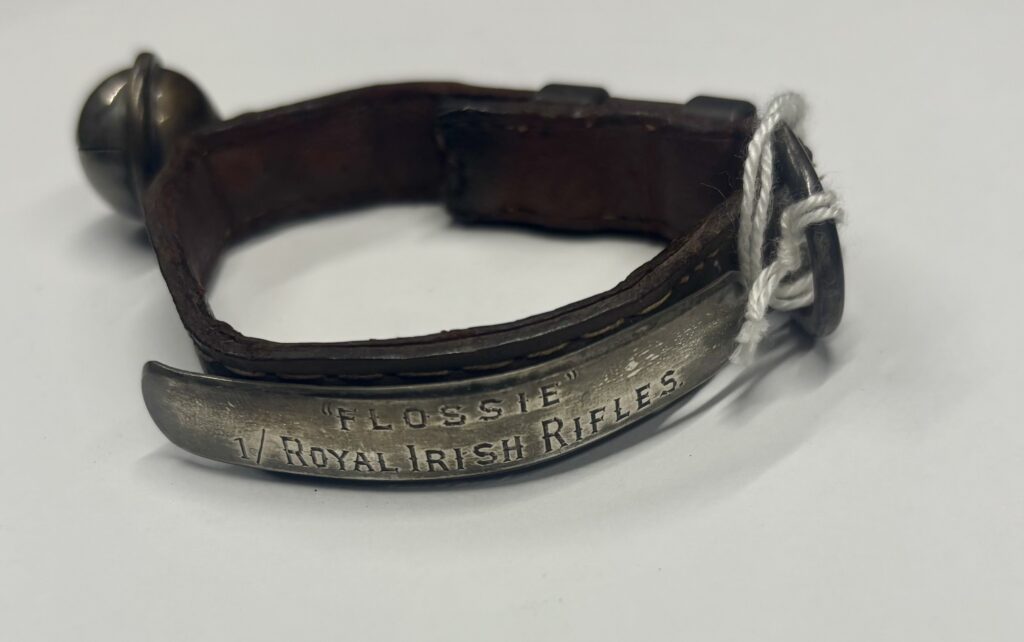
Flossie's collar
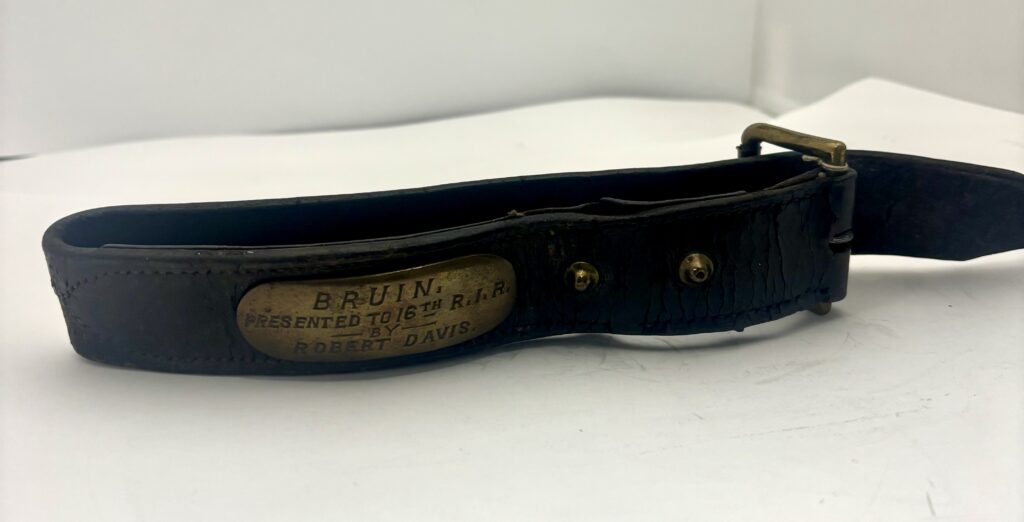
Bruin's collar
Sgt. Paddy Long Dog
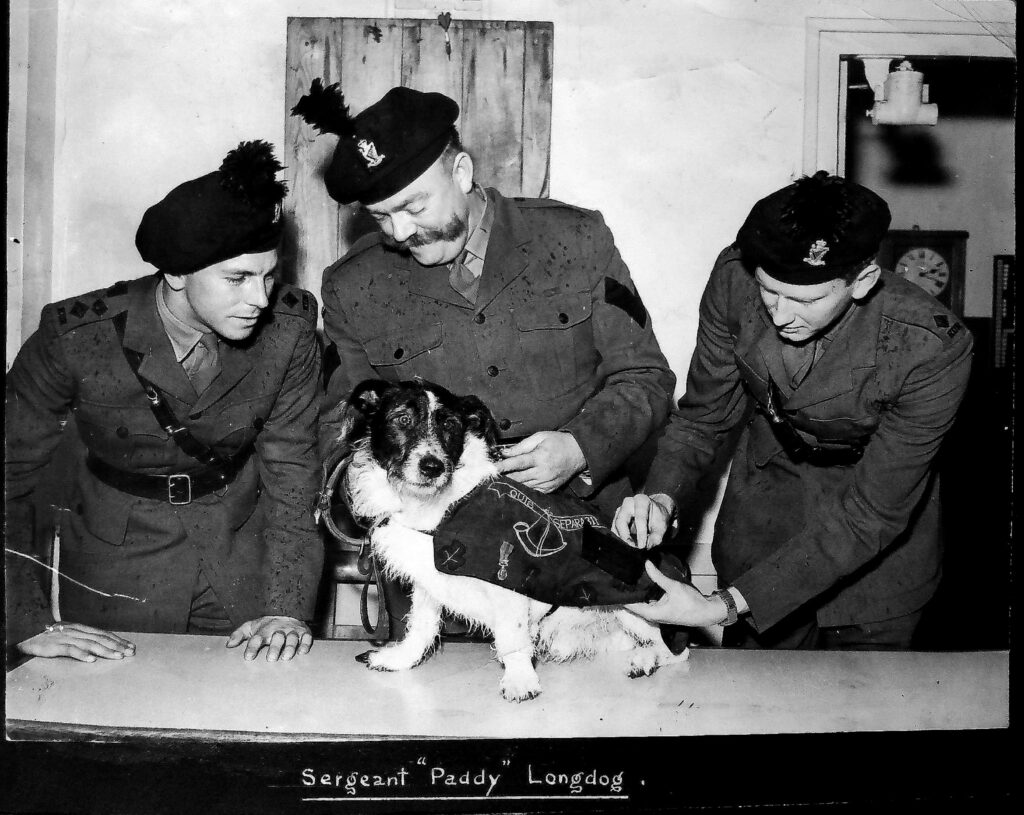
A dog with short legs and a long body, affectionately known as Sergeant Paddy Long Dog, belonged to The Royal Ulster Rifles. He was officially described as a “low-slung, disproportionately long dog with an equally lengthy tail.”
Paddy was found in Cyprus in 1958, and he won a General Service Medal for helping The Regiment track enemy forces. Paddy traveled to Germany and back to Britain with The Regiment and was eventually promoted to Sergeant.
Stickie the Bear
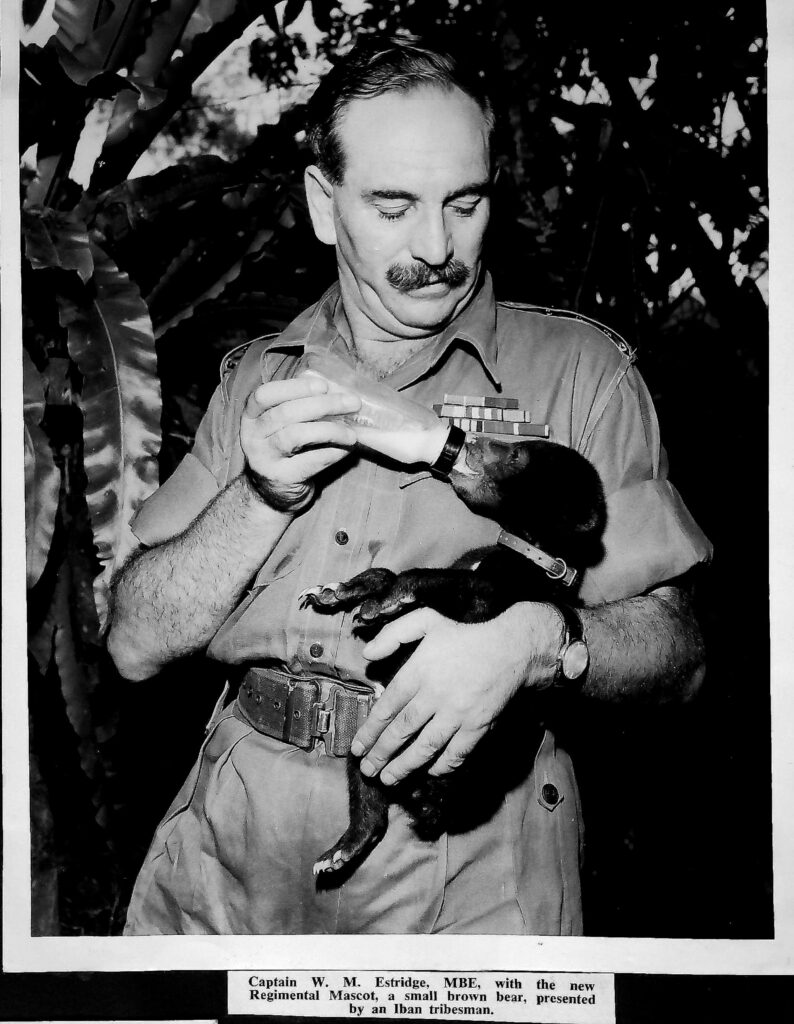
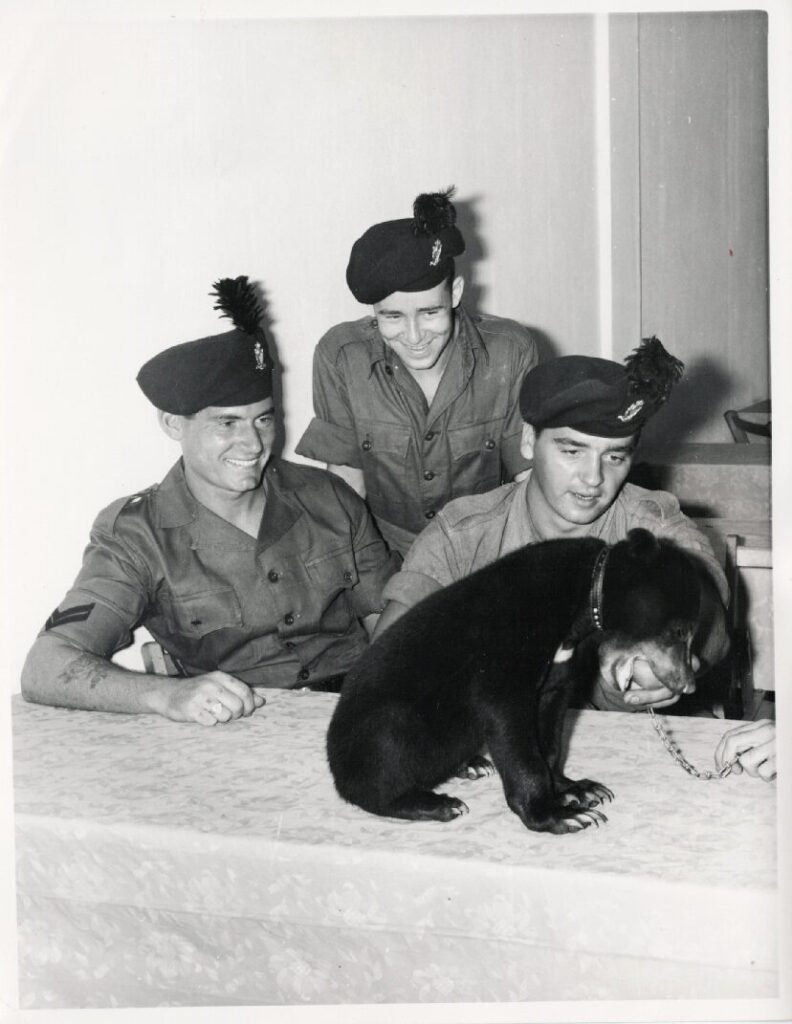
Another beloved pet was Stickie the Bear. She was found wandering around camp when The Royal Ulster Rifles were stationed in Borneo during the Indonesia-Malaysia Confrontation. The little black Malayan sun bear was orphaned and looking for a new home.
The 1st Battalion of The Rifles decided to adopt her and called her Stickie, after The Regiment’s nickname, ‘the Stickies.” The nickname comes from their motto Quis separabit which means ‘None shall separate,’ implying that they ‘stick’ together.
Stickie was often found climbing up poles and running around the guard room at camp. Her official designation was 7018386 Rifleman “Stickie” Estridge, and she was the first Riflewoman to serve with The Regiment. When The Regiment came back to Belfast in July 1965, they presented Stickie to the Belfast Zoo where she lived out the rest of her days.
Stickie as a bear cub
Stickie in the mess
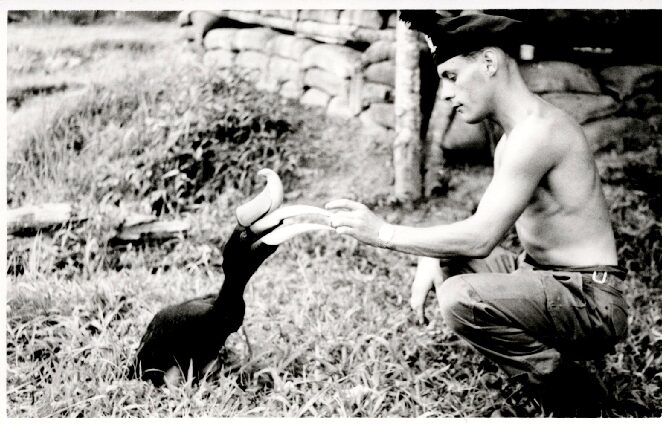
Fitch the Rhinoceros Hornbill
While in Borneo, the 1st Battalion also adopted a Rhinoceros Hornbill bird. The Rhino Hornbill is a large species of forest hornbill that can live up to 35 years in captivity.
A patrol unit found the bird and radioed back to camp that they needed a cage for a Rhino Hornbill. The Quartermaster assumed the patrol had found a Rhinoceros. He built a massive cage, much to the amusement of the rest of camp. They named the bird Fitch.
Additionally, local people in Borneo carved a statue of the bird and gifted it to The Regiment. The RUR brought Fitch back to Belfast and presented him to the Belfast Zoo.
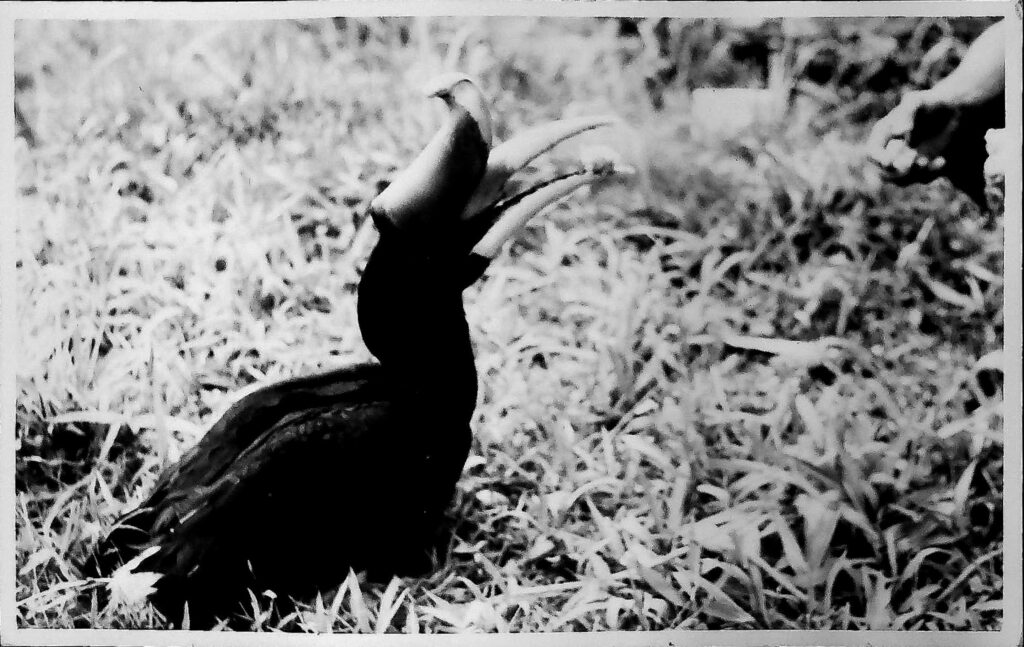
Fitch the Rhinoceros Hornbill
Conclusion
Animals have been and continue to be important members of the British Army, especially in the Irish Regiments. Whether official or unofficial, dogs, birds, horses, cats, and even bears perform useful duties and provide emotional support for soldiers.
Many of the objects seen here can be found in our collections online.